The Alamo is one of America’s most recognized historic resources, it is listed as a UNESCO World Heritage Site and an early entry to the list of National Historic Landmarks. The site holds evidence of Native Americans inhabiting the site prior to the structures that remain today. Founded in 1724 by Spanish missionaries, the mission reached its peak in 1772 and consisted of the unfinished Church, Long Barrack, and a walled compound. The famous battle of 1836 left the mission compound in ruins; sections of the compound wall and Long Barrack were destroyed and the Church damaged. The U.S. Army repaired and and completed the church with the iconic façade that we see today.
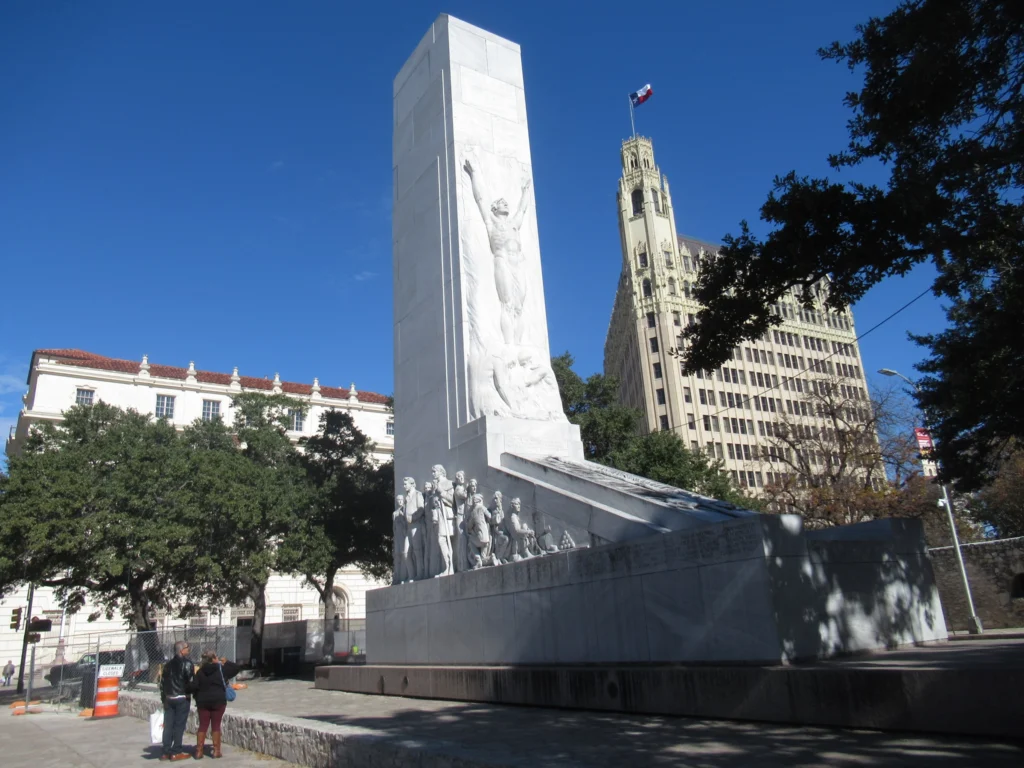
Changes in the urban fabric over time led to the dilution of the sites definition. In the 1930s site west of the Church included the construction of a Cenotaph in remembrance of the souls who fought in the 1836 battle.
Recognizing the need for strengthening the understanding of the resources history and the original site boundary, a masterplan committee was formed and in 2017 a masterplan for the revisioning of the site was published. As part of the wholistic program, the masterplan recognized the need for major repairs at the Cenotaph. In 2021, CVM were engaged to establish the condition of the Cenotaph and prepare a program for repair. The assessment exposed deterioration in the stone assembly and significant failures in the backup structure resulting from detrimental behavior of the combined material elements, resulting the the need for complete disassembly and reconstruction that included a new backup support structure.
Location: San Antonio, TX
Prime Consultant: HKS Architects